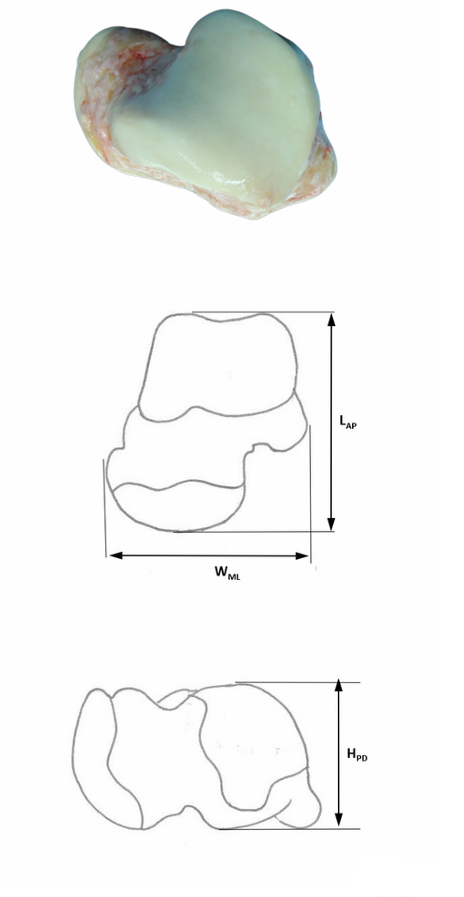
The Astragalus distributed by FBTV is taken in its entirety. The cartilage-coated head and the six faces are retained: the upper body has the relief of the astragalic trochlea
Used in orthopaedics in applications:


Homologous tissue comes from carefully selected donors, with a thorough evaluation of their medical history and thorough physical examination. Standard screening includes: anti-HIV 1/HIV 2, anti-HCV, HBsAg, anti-HBc, anti-HBs, anti-Treponema pallidum, anti- HTLVI/ HTLVII, HBV-DNA, HCV-RNA, HIV-1 RNA. On each donor and tissue is also subjected to microbiological screening and, if deemed necessary, additional tests. Tissues are harvested exclusively in the operating room to ensure sterility. The harvested tissue is kept at +2oC /+8oC until processing begins in FBTV’s classified laboratories.
Bone tissues are stored at -80°C and inside a double EVA bag, which is resistant to low temperatures. Tissues are initially stored in a ‘quarantine’ freezer and then moved to the ‘suitable for distribution’ freezer after donor and tissue evaluation.
The tissue is shipped frozen in a container with dry ice, athermic, certified to ensure temperature maintenance during transport. The shelf life of bone and cartilage tissues distributed and maintained at -20°C/-30°C is 90 days from the date of shipment, if maintained at -70°C/- 80°C, 5 years from the date of procurement; once thawed, they must be used within 7 days.
The Bank guarantees proper preservation until receipt of the tissue; in the event of any problems occurring during transport, the user must immediately notify FBTV. All tissues distributed to implantation centres are accompanied by documentation describing: suitability of the donor, origin and characteristics of the tissue, expiry date, serological and microbiological tests performed, method of preservation, specific instructions for storage and implantation, documentation for follow-up of the implanted tissue. Each tissue must be used for a single patient.
The results obtained to date show that homologous bone tissue retains its original haemodynamic, inductive, conductive and elastic properties and can be considered first choice materials. All preparation, handling and storage operations are carried out in an environment with facilities in compliance with national regulations. Laboratory activities take place in environments classified as Grade A according to the European Guide to Good Manufacturing Practice (GMP), the classification of the environments is verified with continuous checks in order to minimise contamination risks. Access to the classified environments requires specific clothing to minimise possible contamination from outside and to safeguard the safety of personnel.
Entry to the processing premises is strictly limited to persons involved in the process or visitors accompanied by in-house personnel.
The processing of bone segments includes:
Vancomycin, Meropenem
Quality and safety are guaranteed:
and during processing with grading, according to a
defined scale;
solutions for 24-48h at +2°C/+8°C;
fungi, during all phases of activity.
The clinical use of human tissue offers important benefits for recipients. Like any product of human origin, their use is not without risks, although these are rare. A control system is needed to ensure traceability and identification of the tissue at any stage of the process, from donation to recipient. Each tissue is identified with a unique code to allow traceability from origin to destination. Once the tissue is transplanted the code must be attached to the recipient’s medical history. FBTV must be informed when the tissue has been transplanted, through the completion of the “Traceability Card” attached to the tissue. The bank must be informed if the tissue has not been implanted.
If there is suspicion or evidence of a serious adverse reaction or an effect in the recipient possibly related to the safety and quality of the transplanted tissue, the physician should contact immediately and complete the ‘Rapid Notification of Suspected Serious Adverse Events of Suspected Serious Adverse Events” or “Rapid Notification of Suspected Serious Adverse Reactions”.
FBTV is registered on the list of Tissue Banks accredited by the National Transplant Centre; regulated activities include donation, collection, evaluation, preparation, preservation and distribution of homologous tissues. It operates in compliance with international standard ISO 9001:2015 and has a certification process in place to certify that tissues meet predefined safety, traceability and morphological requirements. Homologous tissues procured, processed, stored and distributed meet the requirements of Italian legislation (Law 91/99, Legislative Decree 191/97, Legislative Decree 15/11/2016, Legislative Decree 256 16/12/2016, State/Regions Agreement 66/CSR 8/3/2018) and European Directive 2004/23 and Directives 2006/17/EC, 2006/86/EC, 2012/39/EU, 2015/565/EU, 2015/566/EU. FBTV follows the standards of the main scientific associations: European Association of Tissue Banks (EATB), American Association of Tissue Banks (AATB), and the recommendations of: Good Tissue Practices (Euro-GTP) and the Council of Europe EDQM Guide to the quality and safety of tissues and cells for human application.
Tutte le info per richiedere un tessuto incluso il modulo da compilare. Dopo aver ricevuto il vostro modulo, il nostro team procederà con una valutazione iniziale e vi contatterà.
oppure Accedi per scaricare il tariffario.
